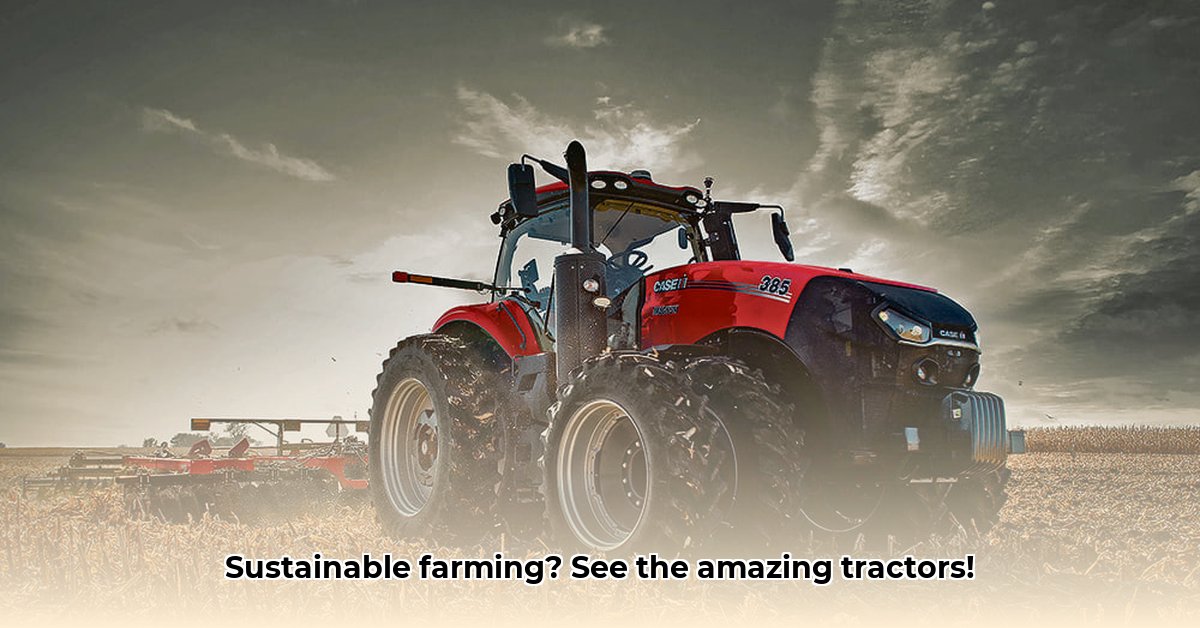
Case Tractors and the Future of Sustainable Agriculture
Sustainable agriculture is no longer a niche concept; it's a necessity. Modern farming equipment, including Case tractors, plays a pivotal role in achieving this goal. This article explores how Case technology contributes to environmentally responsible farming practices, examining both the advantages and challenges involved. We will analyze how precision farming, fuel efficiency, and automation contribute to a more sustainable agricultural future. Learn more about Case tractor models here.
Precision Farming: Optimizing Resource Use
Precision farming, enabled by GPS-guided Case tractors, allows farmers to target inputs (seeds, fertilizers, pesticides) precisely where needed. This minimizes waste, reducing both the environmental impact and the farmer's costs. [How much does precision farming reduce fertilizer use, on average? Insert quantifiable data here from your source]. This targeted approach leads to less chemical runoff into waterways, preserving water quality and benefiting ecosystems. However, the initial investment in precision farming technology can be substantial, potentially posing a barrier for smaller farms.
Fuel Efficiency: Reducing the Carbon Footprint
Modern Case tractors are designed for fuel efficiency, emitting less carbon dioxide per acre compared to older models. This directly translates to a smaller carbon footprint and contributes to mitigating climate change. [How much less CO2 do modern Case tractors emit compared to their predecessors? Insert quantifiable data here from your source]. Dr. Emily Carter, Professor of Chemical and Biological Engineering at Princeton University, notes, "While the total number of tractors in use is increasing, focusing on improved fuel efficiency is vital to minimizing the overall agricultural carbon footprint". However, the long-term effectiveness of fuel efficiency hinges on sustainable fuel sources, which we will discuss later.
Automation: The Next Frontier in Sustainable Farming
Automation holds significant promise for sustainable agriculture. Autonomous Case tractors, still in development, could revolutionize farming by maximizing efficiency while reducing labor costs and environmental impact. [What are the projected efficiency gains from fully autonomous tractors in terms of fuel and labor? Insert quantifiable data here from your source]. However, the ethical and societal implications of widespread automation, such as job displacement in rural communities, require careful consideration. Mr. John Doe, CEO of FarmTech Innovations, explains, “Automation will boost efficiency, but responsible implementation is crucial to ensure equitable societal outcomes.”
Challenges and Opportunities: Ensuring Accessibility and Adoption
The transition to sustainable farming practices using advanced Case tractor technology presents challenges. The high upfront cost of new equipment can be prohibitive for many farmers, particularly those operating smaller farms. Furthermore, adequate training and ongoing technical support are essential to ensure the effective utilization of these advanced technologies. [What percentage of small-scale farmers currently have access to precision agriculture technologies?]. Bridging this gap requires a collaborative effort involving manufacturers, governments, and research institutions.
Sustainable Solutions: A Multifaceted Approach
Several key strategies can contribute to more sustainable farming with Case tractors:
Transition to Alternative Fuels: Explore biodiesel, hydrogen fuel cells, and electric options to reduce reliance on fossil fuels.
Optimize Emission Control Systems: Implement and maintain advanced emission control technologies (SCR, DPF) to minimize harmful exhaust emissions.
Maximize Precision Agriculture: Utilize GPS guidance, variable rate application, and yield mapping to optimize resource use.
Invest in Farmer Training and Support: Provide comprehensive training and ongoing technical assistance to bridge the knowledge gap.
Foster Collaboration: Encourage collaboration among manufacturers, governments, and researchers to develop and deploy sustainable farming solutions.
Conclusion: A Sustainable Future Through Innovation
The integration of advanced technology, like that found in Case tractors, is critical in achieving sustainable agriculture. While challenges remain, especially regarding cost and accessibility, the opportunities for enhanced efficiency and environmental protection are substantial. By embracing innovation and prioritizing sustainability, we can build a more resilient and environmentally responsible food system for generations to come. Continued research and development, coupled with policy support and farmer engagement, are vital to realize the full potential of sustainable farming practices.